





- Home

- Learn
- Healthcare
- Healthcare marketing trends to watch in 2026
HEALTHCARE
Healthcare marketing trends to watch in 2026
Contents

 19 min read


Businesses have long warned of a massive increase in consumer control: a new age dominated by the highly informed, highly discerning buyer, capable of controlling the entire purchase journey from start to finish.
However, it appears that healthcare has only recently woken up to this phenomenon.
Beginning in the early days of the pandemic, medical “customers” suddenly found themselves with an influx of health concerns and a lot of time on their hands to research and prepare before settling on a course of treatment.
Yet it’s likely this COVID-era development was just the latest phase in an ongoing industry transformation characterized by a rise in deductible fees, as well as an uptick in medical costs.
But whether the change came before the pandemic or after, the result was the same: a new breed of empowered healthcare consumers, forever in search of seamless, individualized experiences made popular by online vendors and big-box retailer brands.
It’s what’s become known as the “consumerization of healthcare,” and its “patient-first” principles are the key to healthcare marketing success.
In other words: If you’re a marketer hoping to gain any ground in the healthcare field over the next 12 months, your patients will have to take front and center.
Ramon Soto,
“I actually think [healthcare marketing is] probably 10 years behind the times in terms of our sophistication and approach, and I don’t think anybody benefits from that… So we have a lot of work to really rethink how we go to market, how we tell our story, how we engage with consumers… We have to get to a very different place. It’s a call to arms.”
Senior VP, Chief Marketing and Communications Officer
Northwell Health
Your industry has fallen behind. And the time for catching up is now.
So, in this article, we’ll share the latest healthcare marketing trends shaping provider strategies, as they adapt to changing patient behaviors and decision-making patterns.
With more and more prospects conducting their own digital research, reputation management has gotten very, very real.
“But I have no control over patient reviews!” you say.
Yes and no. You might not be able to change what people say about your practice, but you can guide the overarching conversation by spotlighting positive patient experiences and engaging in social and communal outreach.
As for reviews themselves: you have to make them available. And you have to proactively cultivate them whenever you can. Why?
Also, reviews count for a lot when it comes to ranking on Google[EH1] .
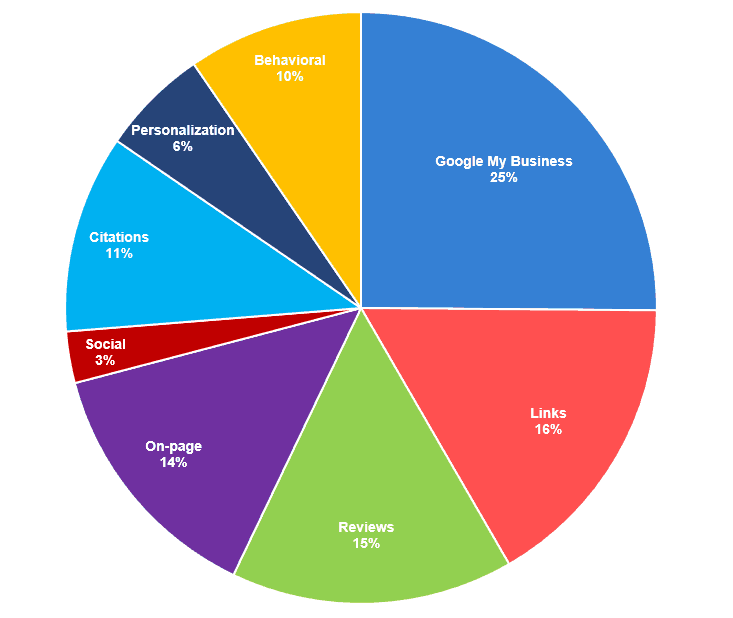
So how do you make sure your online reputation looks good (and stays that way)?
Some ideas:
It’s territory we’ve covered before, but it still holds true for 2026 and beyond.
Until recently, most healthcare communication was broad and generic. Clinics sent the same reminders, newsletters, or follow-up messages to everyone because they didn’t have the tools to personalize things at scale.
That has changed. With better data, digital tools like healthcare CRM, and the rise of AI, healthcare organizations can now understand patient needs more clearly and communicate in ways that feel tailored rather than mass-produced.
This shift is also being driven by patient expectations. In a study, nearly 78% of patients said personalized marketing influences their choice of healthcare provider.
Personalization means patients receive information that fits their situation. Someone scheduling a first visit might get simple preparation steps. Whereas someone managing an ongoing condition might receive messages on timely check-ins or educational resources linked to their treatment.
Tips for helping prospects feel less like a number and more like a valued customer include:
Above all, remember to remain flexible, as each prospect represents a different set of needs, wants, and health concerns.
I’ll wrap this idea with the words of Don Stanziano, chief marketing, and communications officer and digital engagement leader at Geisinger Health:
“There is no one best approach because every customer is on their own journey… You have to tailor your content and your channel selection to meet the needs of customers at every stage of the journey. If you have the right mix of content distributed across the right channels, the customers will tell you where they are.”
While some restrictions for remote communications were eased in light of the pandemic, regulations for the protection of electronic protected health information (ePHI) remain alive and well. You’re still very much required to remain compliant with a variety of crucial industry directives including:
Ensure all systems used for storing and disseminating prospect/patient information can meet the necessary requirements for compliance under these guidelines (which—spoiler alert—can and will change over time).
Also, keep in mind full compliance might necessitate programs for data encryption as well as a system for regular security audits.
[Note: Going into business with a third-party vendor? Make sure they can commit to a business associate agreement (BAA) for HIPAA-compliant procedures before signing them on.]
As patients become more empowered, healthcare marketing will become an increasingly multifaceted—and multi-channeled—game.
You’ve heard of the sales funnel? Now, meet the sales cyclone: a place where consumer priorities are in constant flux and buyers’ journeys never follow a linear pattern. Curious prospects can jump from website to whitepaper, Facebook, YouTube, appointment booking, and back again.
And your voice and value proposition must remain consistent throughout.
Stay ahead of the storm with an all-encompassing marketing plan that involves both inbound and outbound strategies for healthcare marketing.
Next, build a content arsenal that speaks to every possible prospect need, from preliminary research articles to “What to Expect at Your First Appointment” newsletters.
Finally, be sure your strategy covers a diverse network of media channels so you can find and accommodate prospects at every turn.
An optimal omnichannel experience will ideally include a mix of:
…and more.
Recent industry research also suggests that 75% of healthcare providers see integrated communication as a key driver of shorter wait times and a better overall patient experience, reinforcing the value of connected patient journeys.
Adoption across channels is already widespread. Email remains a core communication tool for roughly 80% of healthcare organizations, while SMS continues to stand out for its exceptionally high engagement, with open rates often exceeding 98%—highlighting how actively patients interact across multiple touchpoints.
The point is to be available to your prospects in the right place, at the right time. To do this, research your desired audience and figure out what they’re looking for, as well as where they “live” (i.e., spend most of their time).
Then be ready to meet them there, armed with actionable info to help propel them forward.
Actually, it’s not so much a wave as it is a whole ocean.
And though interest in telehealth appointments is likely to rise and fall with each new COVID variant, telehealth as a whole—which incorporates everything from remote doctor visits to EHR management—is a new medical reality, permanently woven into the fabric of the industry.
We’ve covered marketing for telehealth at length in a recent series of posts, but here are a few major points to carry with you into the new year:
Obviously, the rise of telehealth will translate to an increase in technology.
And to keep up with our tech-driven times, every healthcare marketing team will need seamless front- and back-of-house solutions for (a) communicating with patients, (b) transmitting crucial medical info, and (c) tracking and synthesizing engagement data. (This applies to all providers, but it’s particularly important for practices hoping to expand in the coming year.)
Here’s a small checklist of tools to employ in 2026:
“When people areseeking healthcare information or treatment, they turn to Internet searches, and [you must do] a phenomenal job of creating content that is actionable, helpful, and relevant to people dealing with medical issues that [appear] in their search results.”
amanda todorovich,
Executive Director, Content Marketing
Cleveland Clinic
SEO is the granddaddy of digital marketing.
Be mindful of SEO best practices and check in on the latest algorithms as often as you can. Your SEO keyword resolution should focus specifically on the needs and pain points of your surrounding community.
If you don’t keep up, your competition will, and you’ll risk ranking beneath them.
Other SEO factors to think about in 2026:
Also, short-form videos have become especially powerful because people consume videos faster and more frequently than long text. Platforms like TikTok, Instagram Reels, and YouTube Shorts make it easy to share quick health tips or patient success stories. These formats increase visibility on social media and often perform well in search results too, because search engines increasingly display video content prominently.
Using content for healthcare marketing also nurtures leads. For example, someone who watches a short video about preparing for a procedure may be more likely to book an appointment later.
A strong content strategy blends long-form educational posts for SEO with short-form video for engagement and trust.
As healthcare organizations receive more inquiries through different channels (websites, chat, messaging apps, and call centers), handling every interaction manually becomes difficult.
Conversational automation helps manage this volume by using AI-powered tools such as chatbots, virtual agents, and voice assistants to respond to common questions and guide people through basic steps. These tools can share information, assist with appointment booking, and collect essential patient details before a staff member needs to step in.
One immediate benefit of conversational automation is faster response time. This reduces drop-offs and increases the likelihood that an inquiry turns into a booked appointment or follow-up conversation.
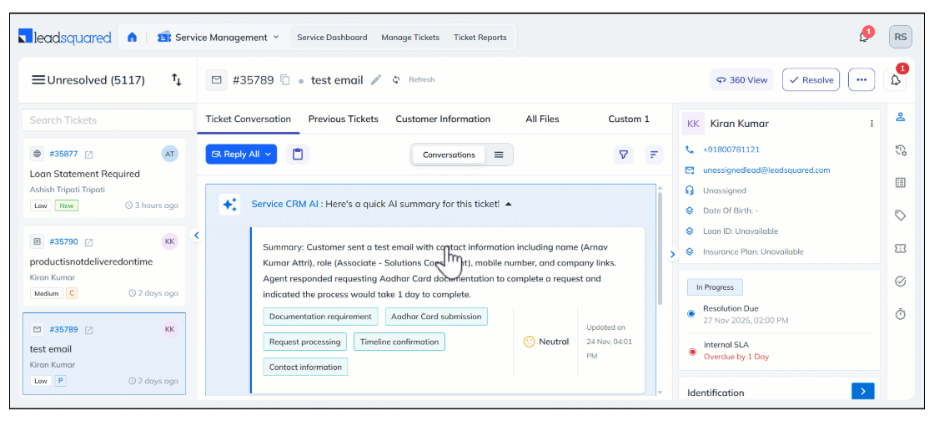
Beyond automated replies, some platforms also support staff during live interactions. For example, LeadSquared’s Lexi AI assists call center and support teams by suggesting replies, summarizing conversations with patients, and helping manage intake information.
This reduces manual effort and allows staff to focus on situations that require judgment or empathy.
As healthcare marketing becomes more digital, organizations often add new tools to handle specific tasks. One platform sends emails, another manages ads, a third tracks website activity, and a separate system stores patient contact information. Each tool may work well on its own, but over time this creates a fragmented setup where information is scattered across systems.
When tools are disconnected, it becomes difficult for teams to answer basic questions. They may know that campaigns are running, but not which ones actually lead to appointment bookings. Data lives in separate places, reports must be stitched together manually, and teams often rely on assumptions instead of clear evidence. This makes planning and budgeting more difficult.
This is why many healthcare organizations are moving toward martech (marketing technology) consolidation. Instead of managing many standalone tools, they adopt fewer, more integrated platforms that bring CRM, patient engagement, analytics, and advertising data together.
One of the biggest benefits of consolidation is better attribution. Attribution means understanding how different touchpoints, such as a search ad, an email, or a website visit, contributed to a patient’s decision. With unified systems, marketers can see these interactions in sequence rather than in isolation.
As a result, teams can make more informed decisions and clearly demonstrate how marketing efforts support real patient outcomes.
People looking for health information online often turn to communities and trusted voices in healthcare. This can include patient support groups, condition-specific forums or subreddits, or social media accounts run by clinicians or patient advocates. These spaces feel more personal, and people use them to understand what living with a condition or going through treatment is actually like.
Healthcare organizations can take part in these conversations in simple ways.
For example, they might publish educational posts on social media explaining common procedures or host live Q&A sessions where clinicians address general concerns. Some organizations also contribute articles or responses in patient forums, focusing on explaining processes like how a diagnosis works or how to prepare for a first appointment.
Influencer-based outreach works in a similar way. Many clinicians and patient advocates already explain health topics online in plain language. When healthcare organizations collaborate on this kind of content, it helps them reach the right audience in a way that is trustworthy.
For healthcare marketers, this approach is about being present where people already seek answers to increase their practice’s visibility.
Healthcare and pharmaceutical companies are increasingly offering services and medications directly to consumers through digital platforms. This approach, known as direct-to-consumer or DTC, allows people to access care without relying entirely on traditional paths such as in-person doctor visits or retail pharmacies. Patients can now discover treatments online, complete virtual consultations, and receive medications or care services at home.
Pharmaceutical companies have been among the early adopters of this model. Companies like Eli Lilly and Pfizer have launched digital platforms where patients can learn about specific treatments, connect with a licensed provider, and order medications directly that they are eligible for. This shortens the path from discovery to access and gives companies more control over how their products are presented and understood.
Healthcare providers and telehealth companies are also adopting a similar approach by offering productized care. Instead of charging separately for each appointment, test, or follow-up, they bundle services into clearly defined programs or subscriptions. These offerings may include regular virtual check-ins, ongoing condition management, preventive care plans, or recurring medication delivery, all priced in a predictable way.
For healthcare marketers, this shift changes how services are positioned. Marketing focuses less on individual visits and more on ongoing value, clarity of pricing, and ease of access. Subscription models, bundled care, and transparent costs become central to how care is explained and promoted. This reflects a broader shift toward healthcare experiences that feel easier to understand, easier to buy, and easier to manage over time.
The healthcare marketing trends discussed in this article all point to one underlying shift: patients expect care to be easier to find and navigate.
Delivering this kind of experience, however, is not simple.
As organizations adopt more digital channels and engagement methods, teams must manage more data and actions. When this work relies on manual processes or disconnected tools, things slow down.
Digital tools such as healthcare CRM platforms help address this challenge by bringing patient data, messaging, and response tracking into a single system. This makes it easier to coordinate outreach across channels, follow up in a timely way, and clearly see which marketing efforts are contributing to appointments and conversions.
LeadSquared’s healthcare CRM is built to support this operational layer of modern healthcare marketing.
If you’d like to see how it would come together in a real healthcare setup, feel free to book a quick demo of LeadSquared’s healthcare CRM.
Voice search (using assistants like Siri, Google Assistant, Alexa) is growing as more people ask health questions aloud, such as “urgent care near me” or “how to treat a sprained ankle.” Addressing this requires optimizing content for natural language and conversational queries, so providers can appear in voice results as well as text search results. This trend is becoming more important as smart speakers and mobile voice use rise.
Mobile health (mHealth) apps are increasingly becoming a part of how people manage their health and interact with providers. Clinics and health systems use apps to offer appointment booking, reminders, symptom checkers, and medication tracking. Promoting these apps through marketing helps improve engagement, supports long-term use, and reinforces the provider’s brand as accessible and convenient.
Yes. Because modern healthcare marketing requires expertise in SEO, content, analytics, and paid media, many organizations are increasingly outsourcing part or all of their digital marketing. Outsourcing allows providers to access skilled specialists and advanced marketing tools without maintaining large in-house teams.
As patients become more discerning, ethical marketing practices — like avoiding exaggerated claims, providing clear pricing, and being transparent about sponsorships — are increasingly important. Trust is a core factor in healthcare decisions, so maintaining honesty and compliance in messaging strengthens credibility and protects reputation.
Healthcare marketers track data from multiple channels such as emails, social media, website visits, and paid campaigns. Analytics help identify which strategies lead to appointments, engagement, or subscriptions. This makes it easier to allocate budget effectively and demonstrate tangible results to leadership.
Yes. Some providers offer bundled or subscription-based services, such as preventive care packages, chronic condition management programs, or telehealth memberships. Marketing these models focuses on predictability and ongoing value rather than single visits or procedures.
Digital transformation in healthcare marketing means moving from traditional, manual methods to digital tools that make marketing faster, smarter, and more targeted. AI (artificial intelligence) is a key part of this shift. It helps marketing teams automate repetitive tasks like scheduling messages, generating content drafts, and analyzing campaign performance, freeing staff to focus on strategy and creativity.
AI also makes marketing more personal. By looking at patient behavior and engagement, AI can tailor emails, ads, and website content to match individual needs. It can even rank potential patients based on how likely they are to book appointments or engage with care, so marketing teams know where to focus their efforts.
In advertising, AI can now identify which messages, audiences, and channels work best, adjusting campaigns in real time to reduce wasted budget and improve return on investment
Enter your details and we'll send you a quick confirmation email to verify your address.

 12 min read
  7 min read
  15 min read



 6 Effective Steps to Create a Successful CRM Strategy for 2026
